



Biogas Cogeneration: Practical Solutions for Distributed Energy Generation
What Is Biogas Cogeneration?
Biogas combined heat and power (CHP), sometimes also called cogeneration, is the process of converting biogas (a renewable fuel produced through the anaerobic digestion of organic matter) into electricity and usable heat. Unlike traditional power plants, which often waste heat, CHP systems capture and reuse heat, thus significantly improving overall energy efficiency with the same fuel input. This means that every unit of biogas creates more value.
Biogas itself typically contains methane, which originates from organic waste such as agricultural residues, food processing byproducts, sewage sludge, and other biodegradable feedstocks. The use of biogas helps reduce organic waste in landfills, lowers methane emissions, and promotes a more circular energy economy.
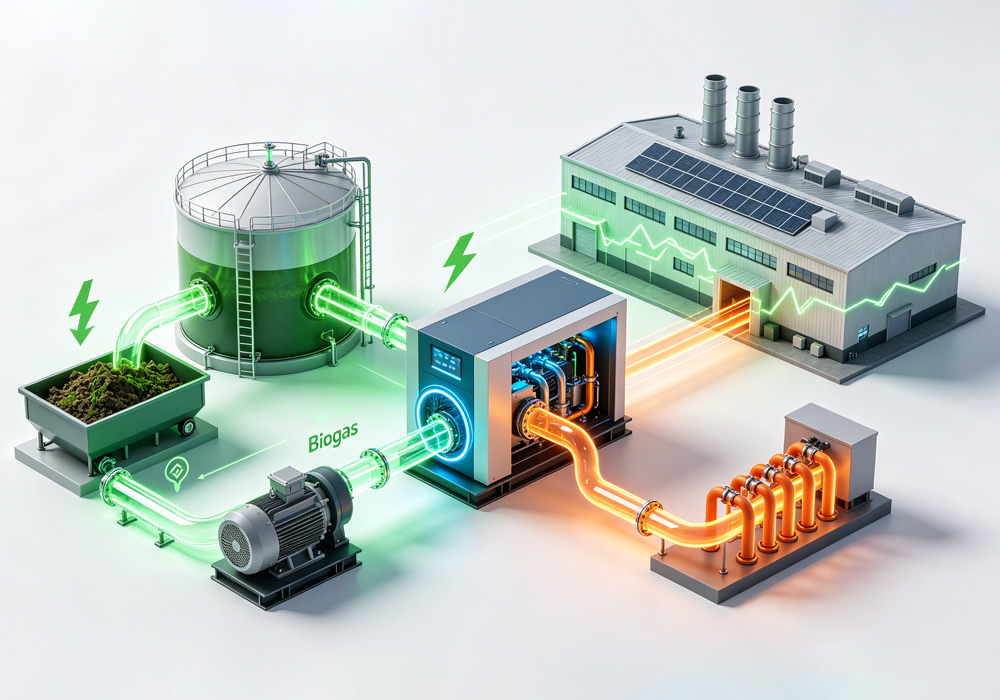
Why Biogas Cogeneration Matters Today
Energy costs, environmental regulations, and sustainability goals are top priorities for industries and municipalities worldwide. Biogas cogeneration responds to these challenges in several key ways:
1. Higher Energy Efficiency
Traditional power generation systems lose a significant portion of fuel energy as waste heat. In contrast, cogeneration captures that heat for onsite use, boosting total system efficiency well above standalone electrical generation.
2. Lower Operating Costs
By generating electricity onsite and simultaneously using waste heat, facilities can significantly reduce expenses related to purchased power and separate heating fuel. Over time, this results in lower overall operational costs and a faster return on investment.
3. Environmental Benefits
Biogas cogeneration taps into renewable gas streams that would otherwise contribute to greenhouse gas emissions if left untreated. Using biogas as a fuel source supports carbon footprint reduction and strengthens compliance with environmental standards.
4. Energy Security and Resilience
Onsite biogas cogeneration offers a decentralized power solution that improves energy resilience. In critical operations, continuous onsite electricity and heat generation can ensure greater uptime and reliability.
PowerLink Energy’s Biogas Cogeneration Solutions
PowerLink Energy has established itself as a professional manufacturer of advanced gas-to-power systems, including biogas-driven cogeneration units. Founded in 2001, the company’s solutions cater to a wide range of applications and deliver reliable performance while maximizing energy output from renewable gas fuels.
CG Series: Flexible and Efficient Biogas Cogeneration Units
One of PowerLink’s key product lines is the CG Series, which comprises high-efficiency distributed energy cogeneration units that can use natural gas or biogas as fuel. These units range in power output from 50 kW to 1000 kW and are suitable for medium to large-scale commercial or industrial facilities.
These systems not only provide electricity but also recover waste heat for on-site use, thereby improving fuel efficiency and reducing energy waste. This approach aligns perfectly with modern sustainability goals while also offering economic advantages.
Key features of the PowerLink CG Series include:
- High Overall Efficiency: Up to approximately 43.4% electrical efficiency, generating additional effective heat energy through cogeneration operation.
- Multiple Configurations: Open, hooded, or outdoor designs support flexible deployment in various environments.
- Advanced Engines and Control Systems: Utilizes top-brand engines and is equipped with intelligent control and safety monitoring systems to ensure long-term stable operation.
- Quick Installation and Modular Design: Supports rapid commissioning and can be customized to project requirements.
Practical Applications of Biogas Cogeneration
Biogas cogeneration units like those from PowerLink are being deployed in a broad range of settings:
- Agriculture and Animal Husbandry: Farms can use biogas from manure digestion to power operations and heat facilities.
- Wastewater Treatment Plants: Organic waste streams are converted into biogas which fuels efficient energy systems.
- Food Processing Industries: Biogas from food scraps and byproducts supports onsite energy needs while minimizing waste.
- Landfill Gas to Energy Projects: Landfill methane is captured and used to generate electricity and heat.
These contexts showcase how biogas cogeneration supports both environmental and economic goals, turning waste into a valuable energy source while enhancing facility operations.
Conclusion
As the world transitions toward decarbonization, technologies like biogas cogeneration will play an increasingly central role in decentralized energy strategies. With the dual benefits of reducing greenhouse gas emissions and enhancing energy efficiency, biogas cogeneration supports sustainable development goals and strengthens community energy independence.
PowerLink Energy’s biogas cogeneration solutions stand out for their versatility, reliability, and adaptability, making them an excellent choice for organizations looking to integrate renewable energy into their operations. Whether for farms, wastewater sites, or industrial facilities, biogas CHP systems offer a compelling pathway to lower costs, stronger sustainability, and enhanced energy performance.